



.svg)

.jpg)











Uniform blog/Closing the gap between concept and live experience
Closing the gap between concept and live experience
.png&w=256&q=75)
Closing the gap between concept and live experience
TL;DR
Explore how long implementation cycles and architectural bottlenecks delay the launch of new digital experiences and hinder the capture of crucial audience insights. Uniform’s no-code, AI-powered tools enable instant personalization and rapid site migration—compressing concept-to-launch from months to hours. Closing the execution gap accelerates learning cycles, giving organizations a lasting competitive advantage in today’s digital landscape.
McKinsey research shows that personalization drives a 5-to-15 percent revenue lift and reduces customer acquisition costs by up to 50 percent. 71% of consumers expect personalized interactions, and 76% report frustration when they do not receive them. The execution gap persists because the personalization advantage depends on delivery architecture, not data access.
The real cost of waiting
Delayed execution of a campaign forfeits the learning cycle it would have generated. A personalization test that waits three sprints for developer capacity produces its audience signal after the segment has moved.
The research also notes that faster-growing companies gain 40% more revenue from personalization than their slower-growing counterparts. Iteration rate explains the gap: how frequently teams generate a hypothesis, deploy an experience, collect signal, and apply what they learned.
Most marketing teams cannot adopt this cadence as their architecture serializes what should be parallel work. Content, design, development, and deployment each wait for the step before.
What creates the execution gap
The industry conversation fixates on data lakes, CDP integration, and AI model sophistication. Meanwhile, marketing organizations lose entire learning seasons because the platform underneath those capabilities requires months of implementation before a single experience goes live.
The Cold Start Problem operates in three reinforcing loops:
- Implementation absorbs the budget before the first experience ships. Platforms consume much of DXP implementation effort on system integrations, leaving marketing teams waiting quarters for capabilities that were supposed to accelerate delivery.
- Personalization cannot begin without live experiences to generate signals. Marketing teams cannot collect behavioral data without deployed experiences, but cannot deploy experiences without a completed platform implementation.
- Migration risk justifies indefinite delay. Quotes arrive with six-month timelines and six-figure budgets, making replacement appear riskier than maintaining the existing bottleneck.
Every quarter spent inside these loops is a quarter of audience intelligence that competitors with faster architecture are already compounding.
The first learning cycle starts now
Uniform's EditMySite eliminates the implementation barrier. Marketing teams input any URL (a legacy installation, a WordPress site, a custom-built platform) and gain immediate access to AI-powered personalization and experimentation without replatforming or development work. A single script tag activates the capability on most enterprise websites. EditMySite allows marketing to deploy personalization at the edge without waiting for a backend release cycle or a security audit of the legacy core. It is the ultimate bypass for teams tired of being told "no" by their own architecture.
The first audience segment begins accumulating behavioral data while the migration roadmap is still being scoped, and that data informs both the campaign strategy and the platform decisions that follow.
Concept to production on the same working day
Scout, Uniform's agentic AI, can implement its recommendations. Marketing teams describe the experience they want in natural language (e.g., “create a hero section with personalization rules for two audience segments”) and Scout assembles it, wires the component logic, and publishes it within a single working session.
The Uniform MCP Server extends this into development workflows, converting prototypes built in tools like Lovable or v0 into production-ready Uniform components without a rebuild cycle.
When replacement becomes necessary, AI extracts the platform in weeks
Some platforms are too constrained or too costly to maintain. Traditional migration projects take ages because human architects must manually map every content type, template, and relationship before development begins. Each mapping decision requires meetings, documentation, and validation.
Uniform Siphon eliminates human-dependent mapping. The AI runs four intelligent operations in parallel:
- Crawls the existing site and analyzes page patterns at scale, identifying content types by examining structural similarities across hundreds or thousands of pages.
- Infers the content model from observed behavior, recognizing that product pages share layout patterns, blog posts follow consistent structures, and landing pages repeat component arrangements.
- Analyzes visual layouts, data structures, and performance patterns simultaneously, making architectural decisions (component reuse, state management, caching) that traditionally required senior developers.
- Generates modern framework code (React, Vue, Next.js) regardless of the original technology and without requiring source code access.
Configuration takes hours. Extraction takes hours to days.
How many learning cycles can marketing complete per quarter?
Organizations that close the execution gap do not merely launch faster. They accumulate audience intelligence, conversion data, and personalization signals at a rate their competitors cannot match. The compounding effect of that knowledge gap determines competitive position more durably than any single campaign outcome.
Close your execution gap now and start your first learning cycle today—before your competitors complete their next sprint. Let our experts show you how.
FAQs
The Cold Start Problem is the gap between platform acquisition and platform readiness, during which marketing teams cannot access the AI capabilities they purchased. Uniform eliminates the gap by making AI optimization available immediately on existing sites, compressing new builds from months to hours, and automating migration when replatforming is the right move.
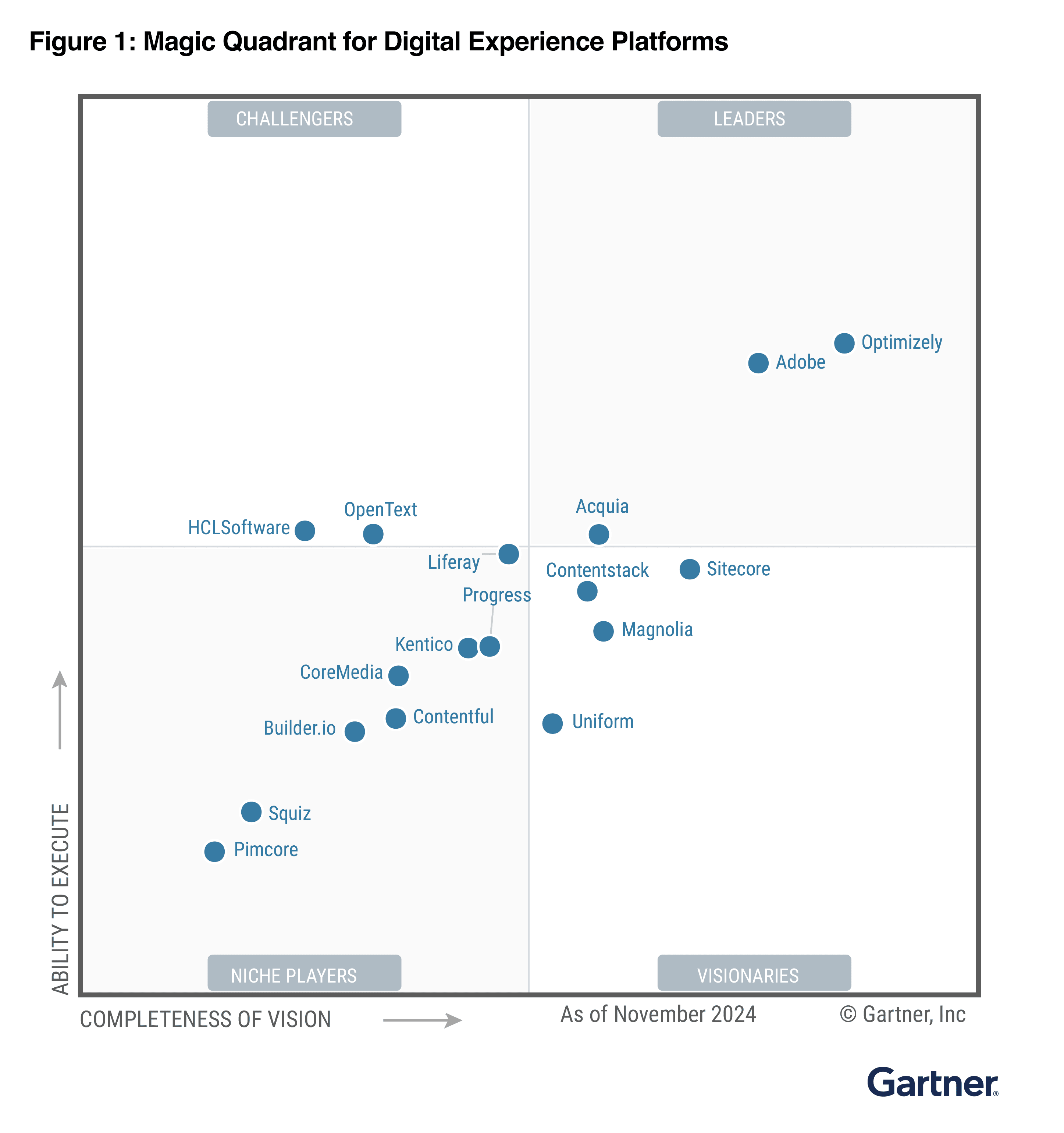
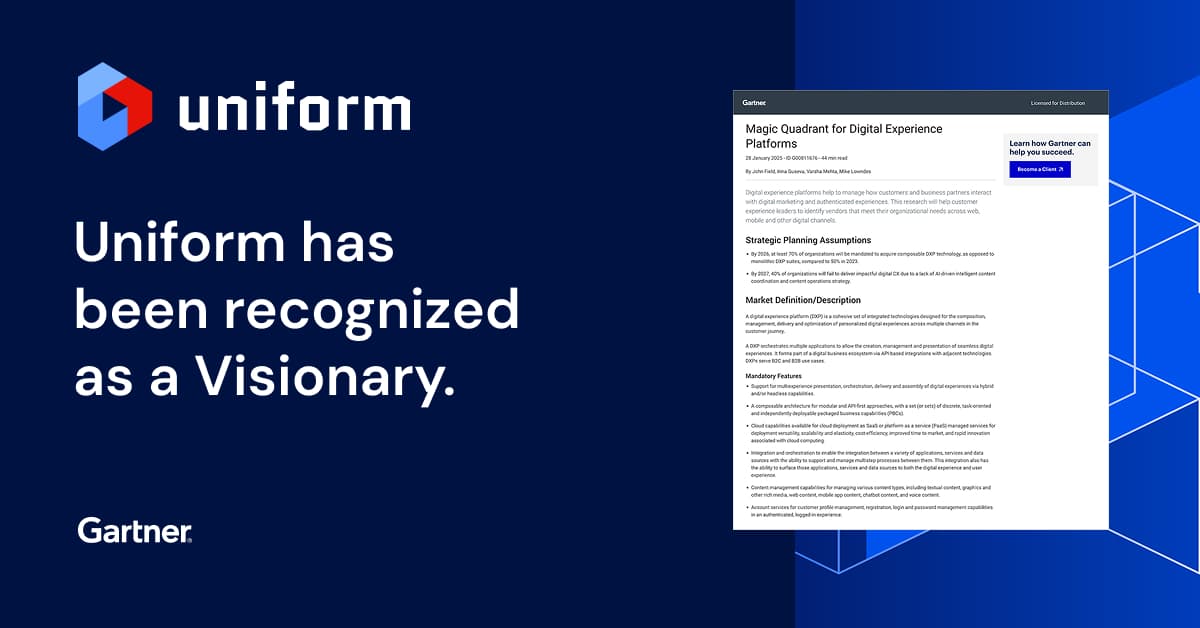
Uniform Recognized as a Visionary in 2025 Gartner® Magic Quadrant™ for Digital Experience Platforms
Learn More