




Uniform is a best-in-class headless CMS: typed, structured content with clean APIs, visual editing and preview built in, and delivery designed for the web's two audiences: the people who read your content and the AI agents that find, cite, and act on it.

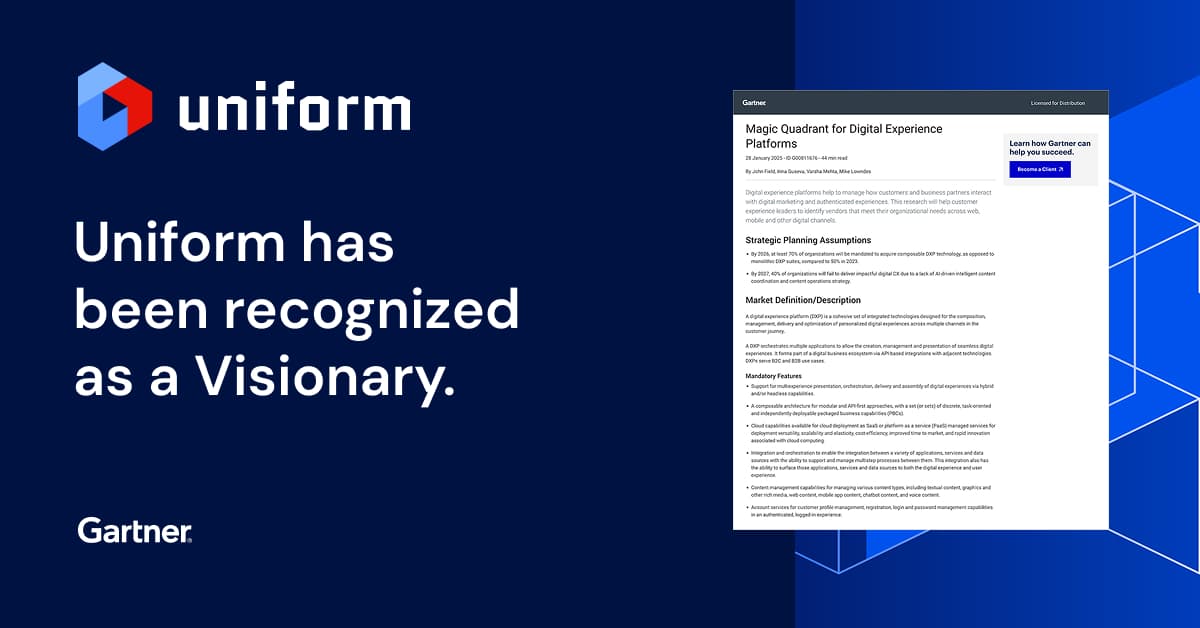
Gartner does not endorse any vendor, product or service depicted in its research publications and does not advise technology users to select only those vendors with the highest ratings or other designation. Gartner publications consist of the opinions of Gartner's business and technology insights organization and should not be construed as statements of fact. Gartner disclaims all warranties, expressed or implied, with respect to this publication, including any warranties of merchantability or fitness for a particular purpose.
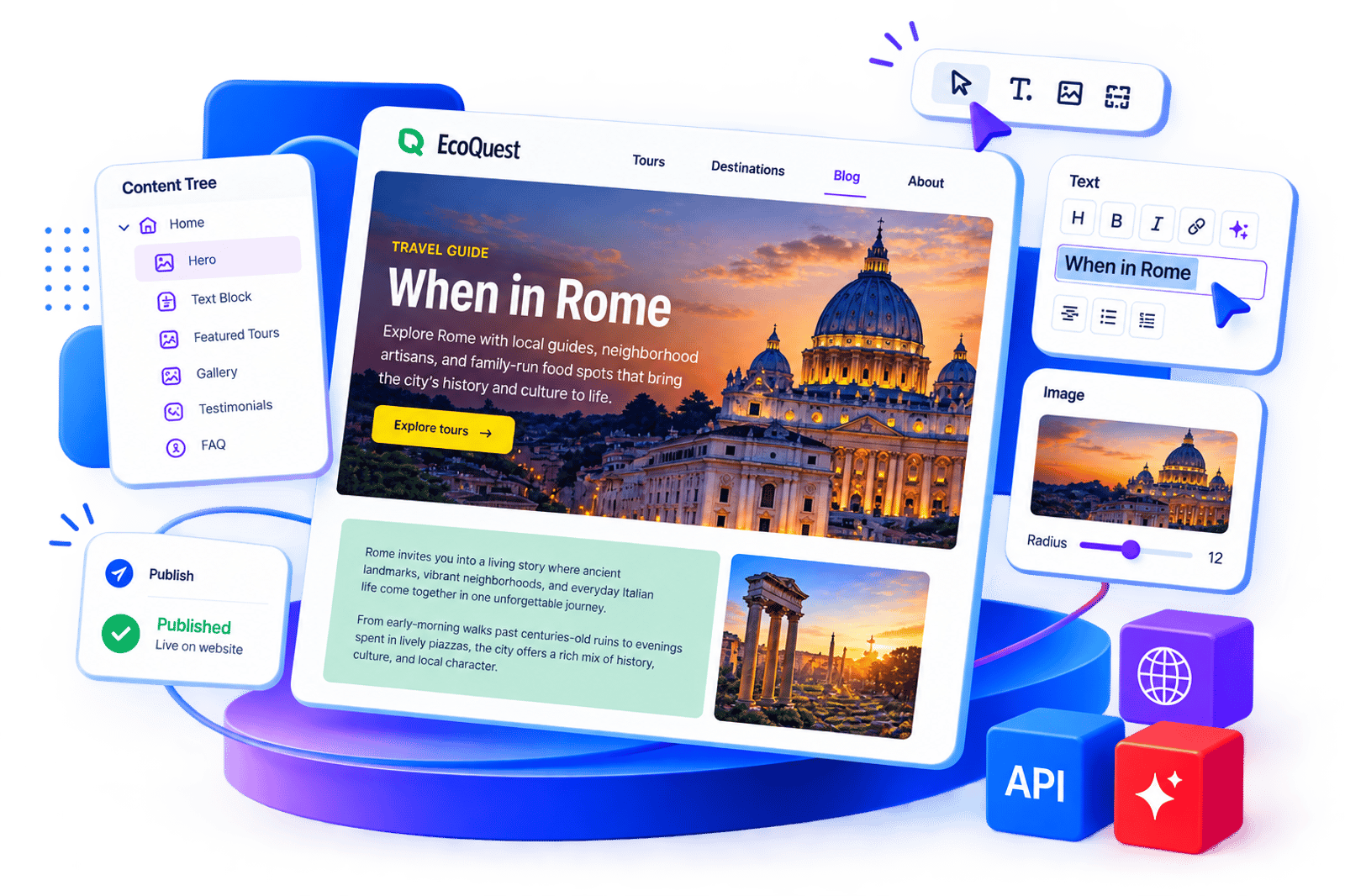
First-generation headless made teams choose: structure for developers or usability for marketers. Uniform ends the trade-off. Content lives as typed entries with validations, localization, and clean APIs, and those responsible for shipping it can compose, edit, and preview visually, without filing a ticket.

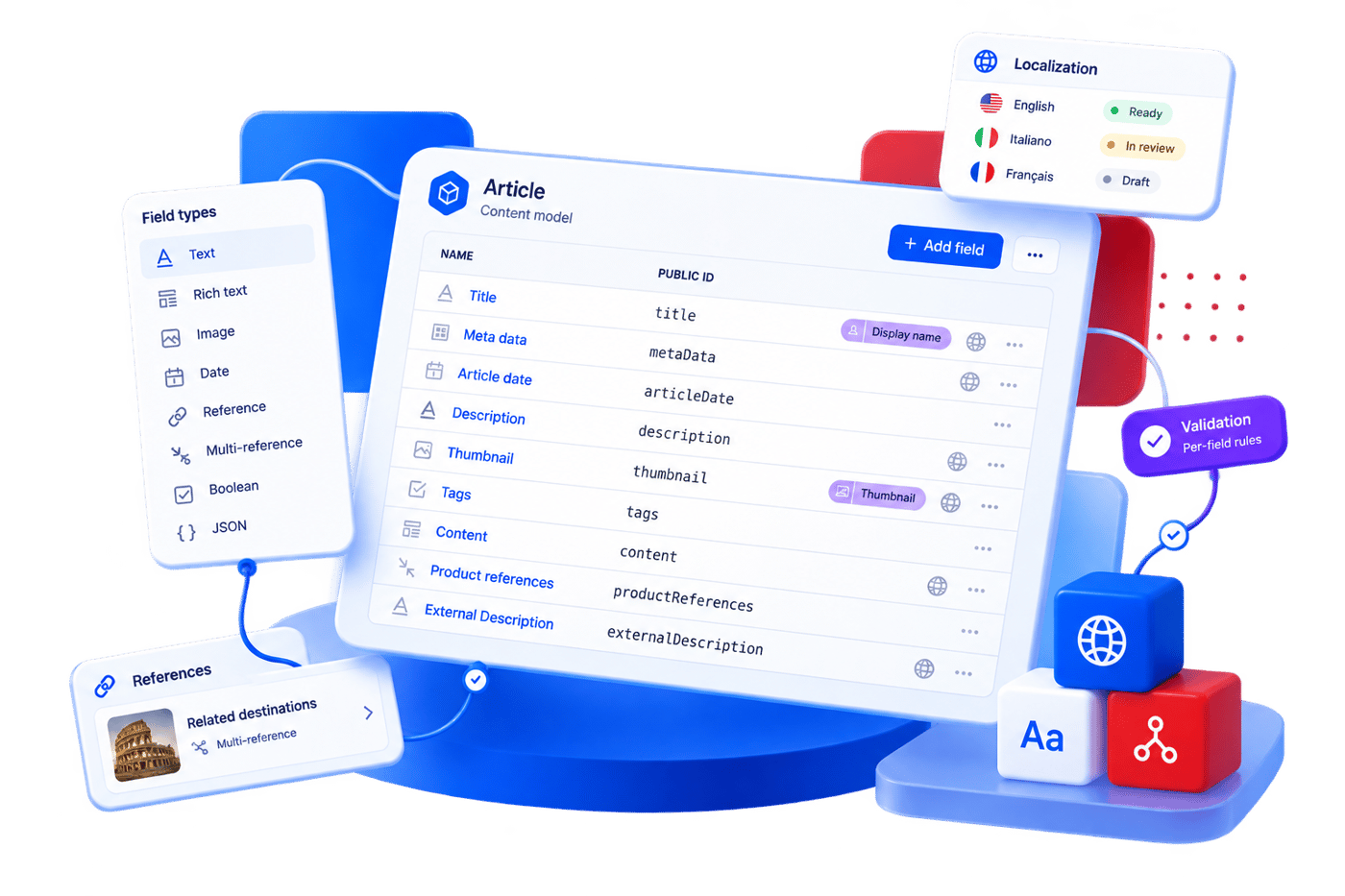
Content types from simple fields to multi-references, with per-field validation and localization.

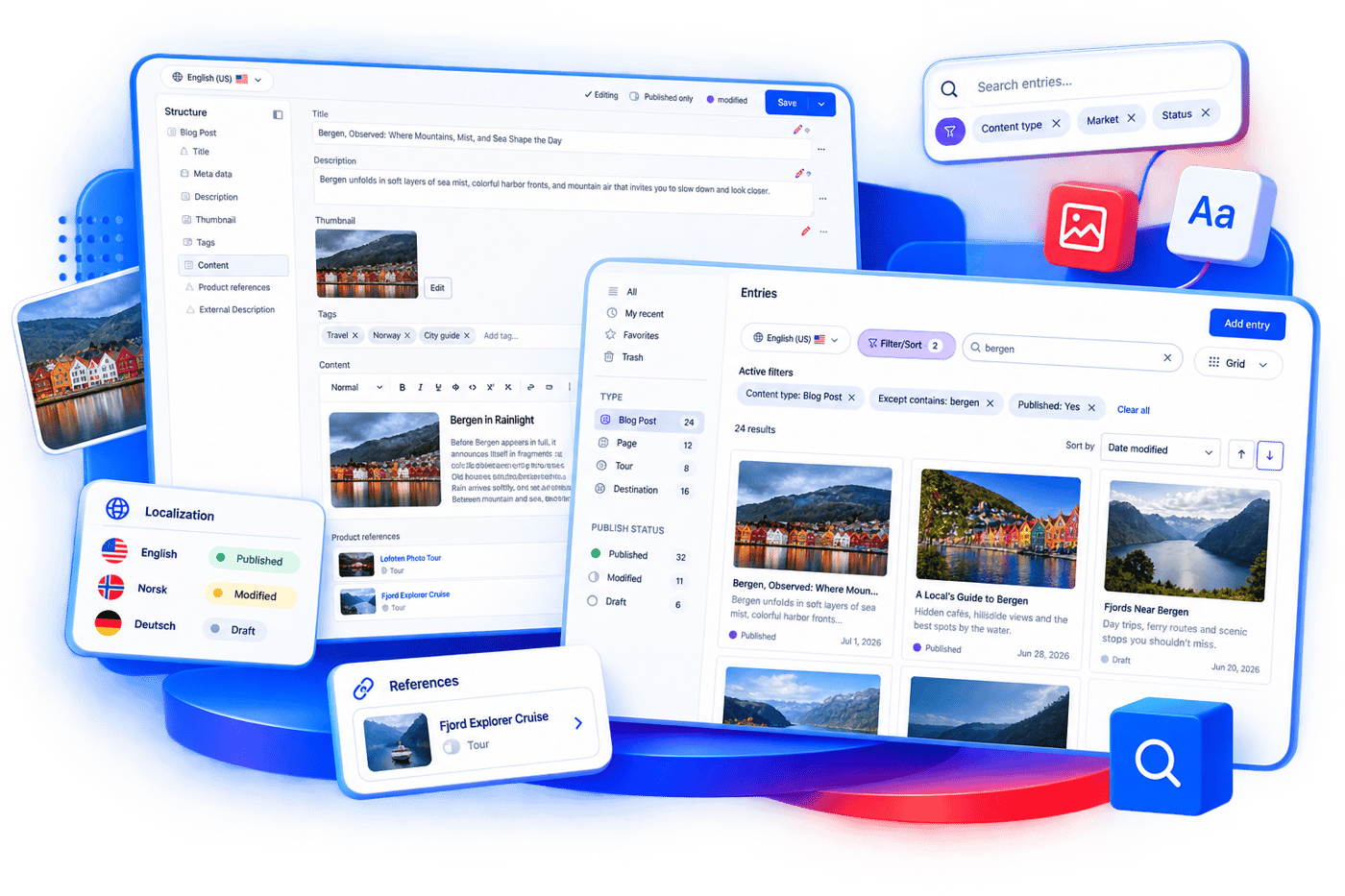
Search and filter across every entry and parameter.

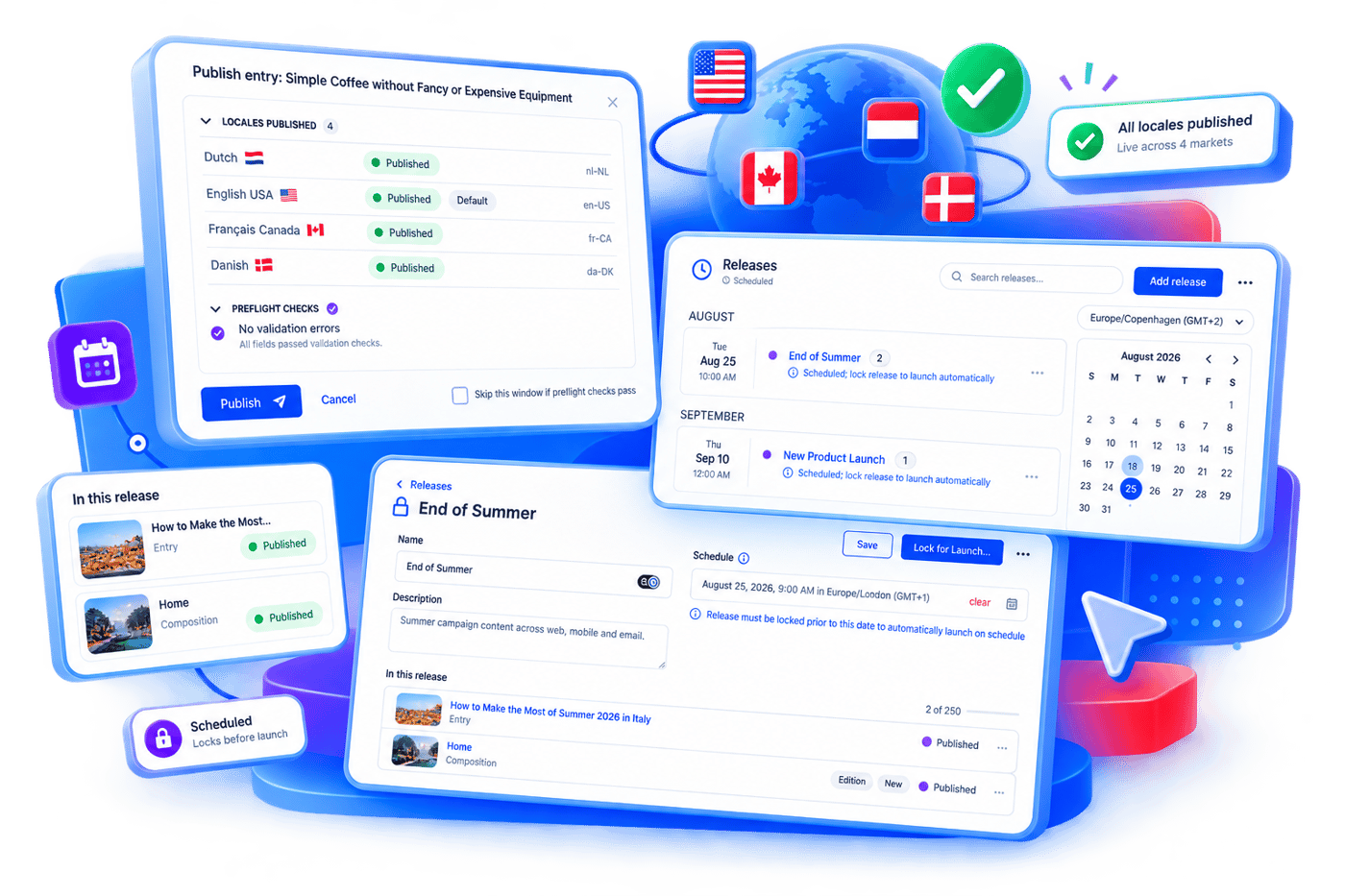
Releases, scheduling, and validation before anything goes live.
Most CMSs now include AI that suggests better headlines. Scout, Uniform's agent, does the work: your team requests outcomes, Scout executes across the platform, and humans approve what ships.
Someone on the team asks for the result they want, in plain language, across the whole catalog.
Retag all articles against the new taxonomy, fill any missing meta data.
Scout returns a reviewable list before anything is written: which entries change, which fields change, and what the new value would be.
412 entries matched · 2 fields each · 0 published
Nothing publishes until someone with the right role approves it. Routine metadata can run itself; brand-critical content waits for eyes.
Approve and publish · Send back for edits
Request for approval in three steps: a team member describes the outcome, Scout proposes every change it would make across matching entries, and a human approves before anything is published.
Illustration of the request to approval flow. Entry counts and field names are examples, not live product data.
Bulk operations apply a described change across every matching entry: refresh outdated references, fill missing metadata, retag a library against a new taxonomy. Vector search finds anything in plain language first.
Scout drafts translations and locale variants across your markets, within the workflows and approvals you already control.
Every operation runs autonomous (drafted directly, reviewed before publish) or in review mode (Scout proposes, you approve). Routine metadata runs itself; brand-critical content gets eyes.
A growing share of your traffic is not human. Answer engines and AI agents now find, summarize, and act on content for the person they serve. Uniform makes your content legible to them by design.
One typed entry
title · body · references · locales
A rendered page, composed and previewed visually.
Structured fields and schemas over MCP, cited accurately.
"source": string
"url": string
One entry, two deliveries: a rendered experience for people, structured and addressable content for agents.
Structured entries with explicit relationships are what machines can parse, trust, and cite accurately: the foundation of AEO and GEO.
Agents, assistants, and coding tools query content and schemas directly via the Model Context Protocol rather than scraping rendered pages.
The same entries render rich experiences for people and clean, addressable content for the agents acting on their behalf.
Typed models, no-code mappings, visual composition and preview
Content flows in from any source, is modeled and composed once in Uniform, and flows out to every channel and audience: site, app, answer engines, and agents.
If your content is scattered across the enterprise in different systems, you can connect any of it to Uniform and streamline your content operations. Connect to any source with no code, map that data to any Uniform content type, and you have the flexibility to federate content or migrate incrementally.
Uniform's content is never trapped either: clean APIs and no-code mappings deliver Uniform entries into any front end, channel, or system in your stack, so adopting Uniform adds a source of truth without adding a silo.
In the Uniform Visual Workspace, your team can take content from the CMS, connect it with any other technology in your stack, and visually manage experiences assembled from multiple sources in a single tab.
Explore the Visual WorkspaceNot all content wants the same treatment. Uniform provides three options, with clarity on which belongs where.
Content created once and reused across channels belongs in typed entries with clean APIs, so every channel reads the same source and every presentation stays a rendering decision.
articles · products · services
Content that only makes sense in one context and is never reused: the hero written for one campaign page, for one moment. Because volatile, in-context content lives in the composition layer, your structured content models stay clean: no presentation checkboxes polluting entries that other channels reuse.
campaign page heroes · landing page copy · promo banners
With Scout, generative content is governed work: variants, calls to action, and localized copy generated within your standards and approved before they ship.
call to action variants · localized copy · personalized variants
The essentials, included and integrated (not bolted on).
Built-in search and filtering finds the content you need, filtered on any content parameter.
Manage markets and locales in a few clicks, choose which ones you are creating content for, and use bulk operations to launch faster.
Connect your translation management system or use AI to translate any content between locales, from a single field to a whole entry.
Define your workflows visually and control which roles can edit, approve, and publish.
Create and manage future releases so pages, components, and entries all go live at the same moment.
Uniform includes sitemap management with URLs and redirects, so site structure never waits on a developer backlog.
Manage header and footer navigation in Uniform, from simple link lists to mega-navs.
Enable automations like SEO & GEO enrichments, validations, or Open Graph image generation on your entries.
Optimize the experience for every visitor by showing the right content based on their in-the-moment intent.
Telus
$1.1M
ROI in year one, alongside a 60x increase in developer efficiency.
Short answers, and a link to the guide when you want the long one.
Yes. Uniform is a best-in-class headless CMS with typed content, clean APIs, localization, workflows, and built-in visual editing, and it also orchestrates existing CMSs and other sources into the same experiences, so teams can adopt it as their CMS, their orchestration layer, or both.
Only if you want it to. Uniform connects any existing content source with no-code mappings, so teams can federate content, migrate incrementally, or keep their current CMS permanently while Uniform composes it into experiences alongside Uniform-native content.
Uniform removes the trade-offs that first-generation headless imposed: marketers get visual editing and preview of truly structured content, integrations happen through configuration rather than glue code, presentation context stays out of content models, and content is agent-ready through MCP by default.
Two ways. Scout, Uniform's agent, executes content work inside the platform: bulk changes, translation, optimization, with humans approving what ships. Externally, MCP access and semantic delivery let answer engines and AI assistants query and cite published content accurately instead of scraping it.
Want to see it against your own content models?
Book a demoStart personalizing for the first one today.