



.svg)

.jpg)











Uniform blog/Intelligent migration: Transforming legacy websites in minutes
Intelligent migration: Transforming legacy websites in minutes
.png&w=256&q=75)
Intelligent migration: Transforming legacy websites in minutes
TL;DR
Uniform's AI-powered Siphon technology revolutionizes website migration by eliminating manual mapping and drastically reducing timelines from months to days. Traditional migration projects are slow, costly, and risky, often leading to technical debt and stalled innovation. Uniform automates content and architecture reconstruction, enabling organizations to modernize digital experiences without disruption. The key takeaway: intelligent migration unlocks rapid, low-risk transformation, empowering teams to focus on growth instead of maintenance.
When IT leaders request migration proposals, vendors return with six-month timelines and six-figure budgets. Agencies warn of content freezes as consultants schedule discovery meetings to plan the meetings that will plan the work. Marketing teams watch seasonal windows close while procurement reviews contracts that may never result in deployment.
Why rational organizations choose technical debt over migration
Enterprise migration projects typically take 4 to 6 months to complete the first page, while migration failure rates range from 30% to 80%. Additionally, 61% of projects exceed their planned timelines by 40% to 100%. Content freeze windows disrupt ongoing operations for weeks, and hidden integration dependencies surface late, destroying carefully constructed business cases. The risk of failure runs high enough that postponement appears prudent.
The economics favor paralysis when migration quotes arrive with nine-month estimates and $800,000 price tags. Specialized consultants charge premium rates for their expertise in legacy code. Platform replacement projects expand scope once architectural constraints emerge.
Organizations with high technical debt spend 40% more on maintenance costs and deliver new features 25% to 50% slower than competitors. Marketing teams work around platform limitations while developers maintain increasingly fragile custom code. IT budgets absorb band-aid solutions as competitive positioning erodes gradually, then suddenly.
Three organizations, three migration nightmares
Financial services firm: Sophisticated React application on Sitecore JSS with excellent code quality and high developer productivity. The problem: escalating platform costs and misalignment in the vendor roadmap. The migration quote: nine months, $800,000, complete rewrite required. The decision: delay indefinitely.
Insurance provider: 15-year-old Sitecore .NET implementation where the original developers have departed. Specialized consultants charge premium rates for maintenance. The migration estimate: twelve months, consultant-dependent, uncertain outcome. The alternative: continue paying maintenance ransom while competitors launch campaigns.
Retail brand: Acquires competitor running proprietary CMS with no code access, no documentation, and a defunct vendor. Manual content extraction and a complete rebuild represent the only option. Marketing campaigns freeze during an 18-month reconstruction project while integration benefits remain theoretical.
How Uniform Siphon reconstructs modern architectures
Traditional approaches fail because human architects must manually map every content type, template, and relationship before development begins. Each mapping decision requires meetings, documentation, and validation. Sequential phases cascade into months.
Uniform Siphon eliminates manual mapping. The intelligent system crawls existing sites and analyzes patterns at scale, identifying content types by examining structural similarities across pages rather than requiring human classification. Machine learning recognizes that product pages share layout patterns, blog posts follow consistent structures, and landing pages repeat component arrangements. The AI infers the content model from observed patterns rather than requiring an explicit definition.
The reconstruction intelligence operates in parallel layers. While one neural network analyzes visual layouts and identifies reusable components, another examines data structures and relationships. A third evaluates performance patterns and optimization opportunities. The AI makes architectural decisions that traditionally required senior developers: which components merit reuse versus rebuilding, how to structure state management, and where to implement caching strategies.
Siphon then generates modern framework code—React, Vue, Next.js—that implements the inferred architecture. The system works regardless of the original technology stack or the availability of code access because it reconstructs from observed behavior rather than source code. Configuration takes hours, execution takes hours to days, and content freeze windows either minimize or disappear. Uniform has proven this across 90+ complex enterprise sites over 3+ years of R&D investment.
Industry research indicates that at least 70% of organizations will be mandated to acquire composable DXP technology by 2026. Marketing maintains campaign velocity during transition without operational disruption. Progressive enhancement replaces nuclear replacement, making vendor lock-in solvable rather than permanent.
Three organizations revisited with Uniform
The financial services firm engages Uniform Siphon to extract React components and reconstruct them on Uniform in 3 weeks. Marketing launches personalization capabilities immediately. Developer productivity increases without platform constraints. The nine-month estimate and $800,000 quote no longer constrain decisions.
The insurance provider uses Uniform's AI to analyze legacy .NET code and restructure via MCP Server integration. Implementation is completed in 4 months, versus the 12-month estimate, while achieving 30-point Lighthouse performance gains and completing page translations in one week. Consultant dependency eliminates post-launch.
The retail brand deploys Uniform Siphon to crawl the proprietary CMS and reconstruct the front-end from live URLs in 2 weeks. Marketing regains campaign control. The acquisition integration finishes on schedule. Seasonal windows open.
The migration decision matrix
Migration vendors sell feature lists; however, these lists often overlook what truly matters: velocity, disruption, dependency, flexibility, and escape routes. Five dimensions determine whether migration accelerates competitive position or extends paralysis.
- Time dimension. Traditional approaches require a minimum of 4 to 6 months. Uniform Siphon completes in hours to weeks. The differential compounds when competitive windows close during extended projects.
- Disruption factor. Legacy migration freezes content for weeks and disrupts campaigns. Uniform's progressive migration minimizes freeze windows to hours or eliminates them entirely.
- Dependency risk. Traditional migration creates consultant dependencies that persist post-launch. Uniform's approach transfers knowledge through implementation, reducing long-term vendor reliance.
- Flexibility metric. Monolithic replacement demands a complete transition before value realization. Uniform enables progressive enhancement with immediate value capture.
- Escape velocity. Organizations actively managing technical debt free up engineers to spend up to 50% more time on work that supports business goals, while Uniform simplifies future migration and creates optionality rather than introducing new lock-in.
Transform your migration approach
Uniform Siphon eliminates the six-month migration bottleneck. Schedule a demo now to see how AI reconstructs your architecture in hours, not quarters.
FAQs
Traditional migration projects often take 4–6 months just to migrate the first page, with failure rates ranging from 30% to 80%. Timelines frequently exceed estimates by 40–100%, and content freezes can disrupt operations for weeks. High costs, consultant dependency, and hidden integration issues often cause organizations to delay migrations indefinitely.
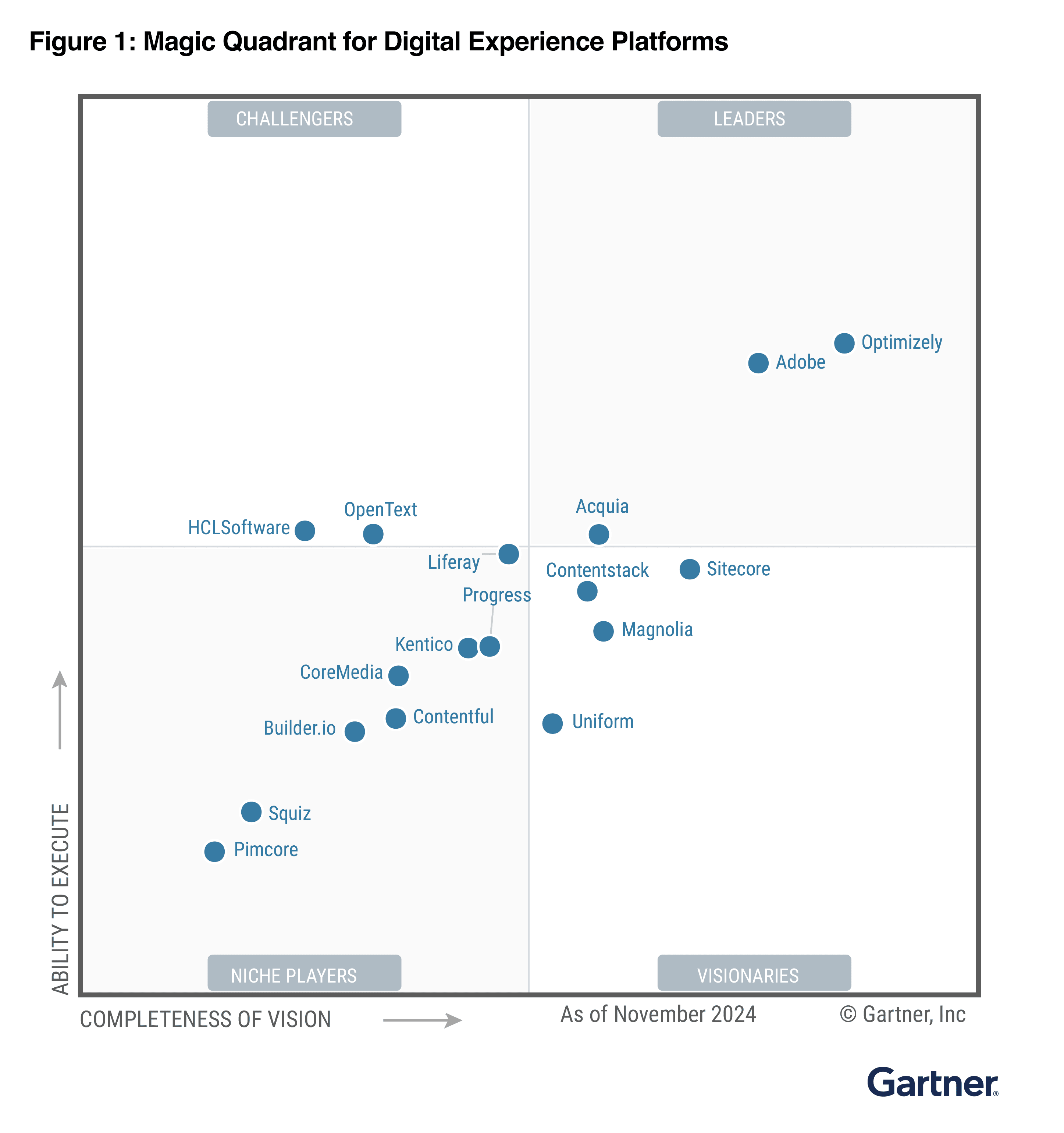
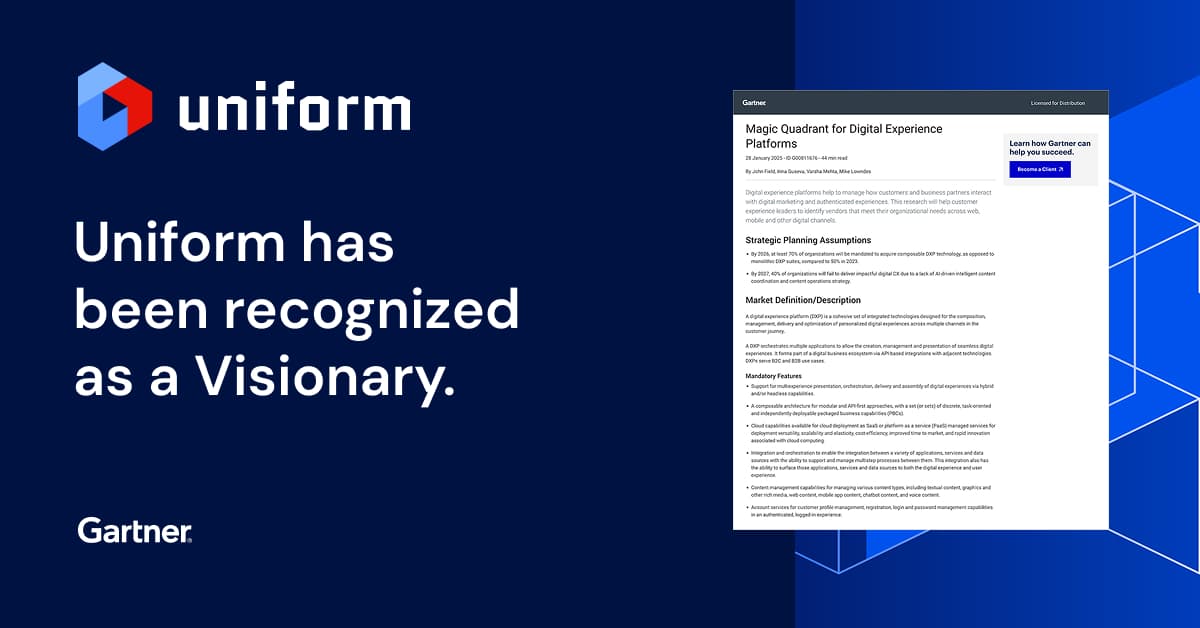
Uniform Recognized as a Visionary in 2025 Gartner® Magic Quadrant™ for Digital Experience Platforms
Learn More