





.svg)
.jpg)











Uniform blog/There’s always savings in composability
There’s always savings in composability

There’s always savings in composability
TL;DR
You may have heard the phrase “There’s always money in the banana stand.” For today’s big brands, that “banana stand” is a composable DXP, which is key for brands facing mounting pressure to modernize while controlling expenses and reducing technical debt. Key takeaway: migrating to a composable DXP like Uniform enables companies to innovate faster, empower teams, and achieve measurable ROI through incremental modernization and unified content management.
From the rise of AI to rapidly changing customer expectations, brands must be agile and cost-efficient to thrive in today’s dynamic landscape. Composable architectures provide a competitive edge by unlocking technical flexibility and delivering greater efficiencies in workflows, time, and costs.
Find out why a composable digital experience platform (DXP) can be the wise financial choice for cost-conscious digital teams, and how composable architecture has helped leading brands streamline operations, boost profitability, and gain a competitive edge.


Why going composable reduces software costs
Brands with older, complex technology stacks know they need to update their content and data infrastructure to eliminate technical debt and adopt modern tools that enable faster experiences. However, migrating from outdated legacy systems often comes with a high price tag, a months or years-long timeline, and plenty of risk.
Unlike traditional migrations that rip-and-replace whole stacks, composability offers an incremental migration framework. It’s a no-code approach that lets you update existing systems and adopt new technologies at your own pace, without downtime or disrupting operations.
After implementing Uniform’s composable solution, TELUS achieved $1.1 million in ROI and saw a 60x increase in developer efficiency and scalability.
By unifying its content management processes across platforms and adopting Uniform’s atomic approach to production, TELUS reduced operational costs and reduced its reliance on developers in its digital workflows.
Why going composable improves productivity
Composable architecture not only beats traditional stacks by minimizing licensing costs. Migrating to a composable stack centralizes access to the content, data, and tools that marketers need to launch high-performing experiences.
Instead of navigating through multiple tabs or waiting for developer help to personalize, test, and publish campaigns, business users can easily build and optimize experiences in a visual workspace. No-code integrations free engineering teams from maintaining custom code in perpetuity, and marketers gain control and autonomy throughout the content creation and delivery process.
Social Thinking, a leading education company, streamlined its content authoring process with Uniform’s composable DXP. As a result, they reduced publishing steps by 55 percent, centralized user training and support, and created a single source of truth for its digital production processes.
Why going composable boosts market competitiveness
Modern brands need modern IT infrastructure to help them move at market speed. But many companies are held back by monolithic platforms that are difficult to upgrade with the latest technologies.
One of the key advantages of a composable DXP like Uniform is its powerful AI and personalization capabilities, which enable business users to create data-driven content in minutes. AI agents accelerate content production and optimization by conducting keyword research, setting up A/B tests, and translating copy—all within a single intuitive environment.
Uniform’s composability enabled VyStar, a major credit union, to create and scale personalized experiences based on real-time data. With Uniform, VyStar reduced dependency on developers and expanded its personalization efforts, enabling digital teams to deliver customized offers that increased conversions and drove revenue.
Save big with a composable DXP
Companies are finding themselves locked into their experience platforms–products that promise agility, but in reality require complex integrations, lead to more technical debt, and higher contract and maintenance fees. Modern, cost-efficient, API-first platforms like Uniform’s composable DXP unify your stack, enabling brands and digital teams to innovate quicker and outpace competitors.
Book a demo now to learn how Uniform can help your organization manage a composable stack that saves time and resources.
FAQs
A composable DXP allows brands to modernize their tech stack incrementally rather than through costly rip‑and‑replace migrations. This step-by-step approach reduces downtime, minimizes risk, and eliminates the need for extensive custom code.
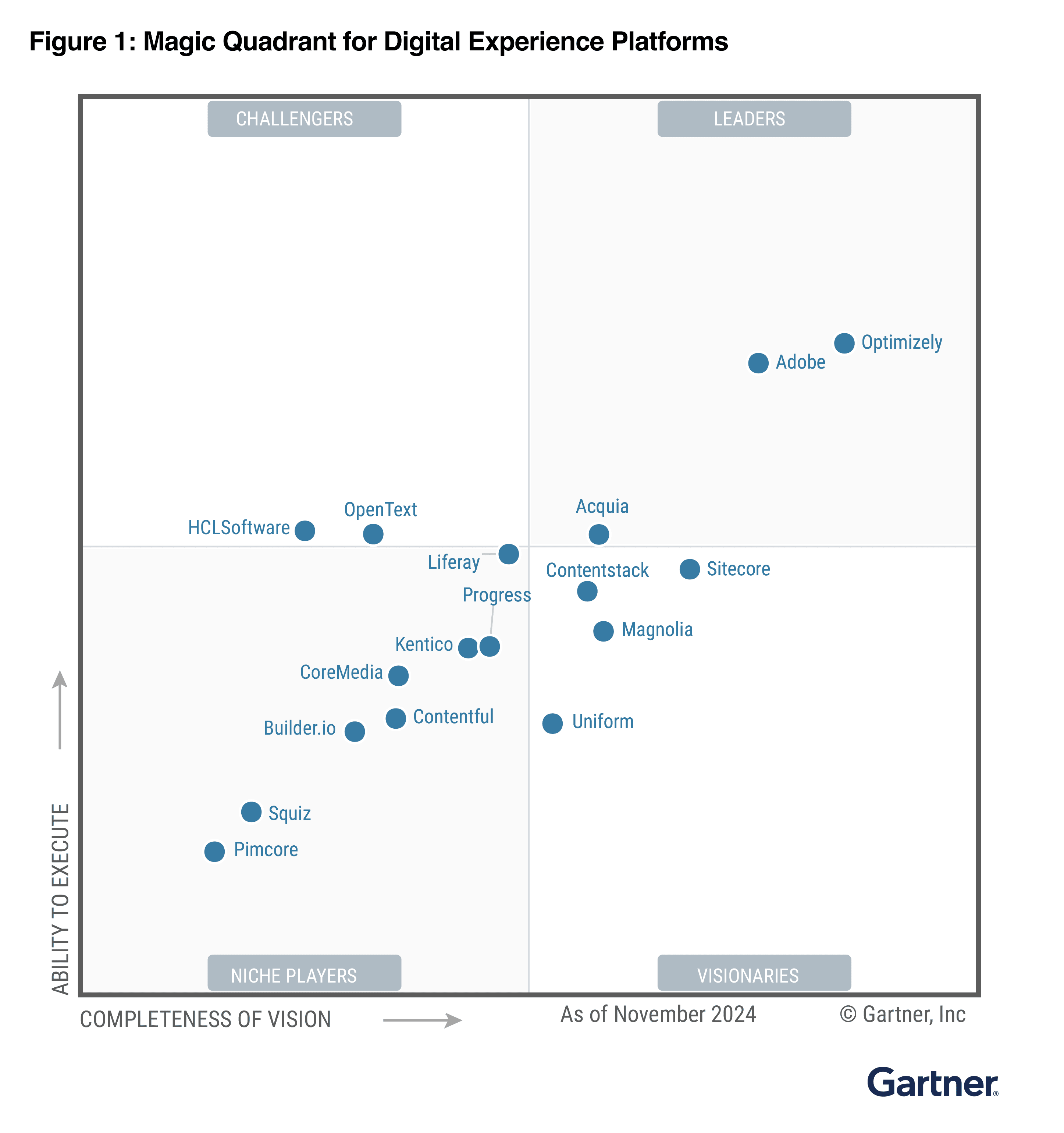
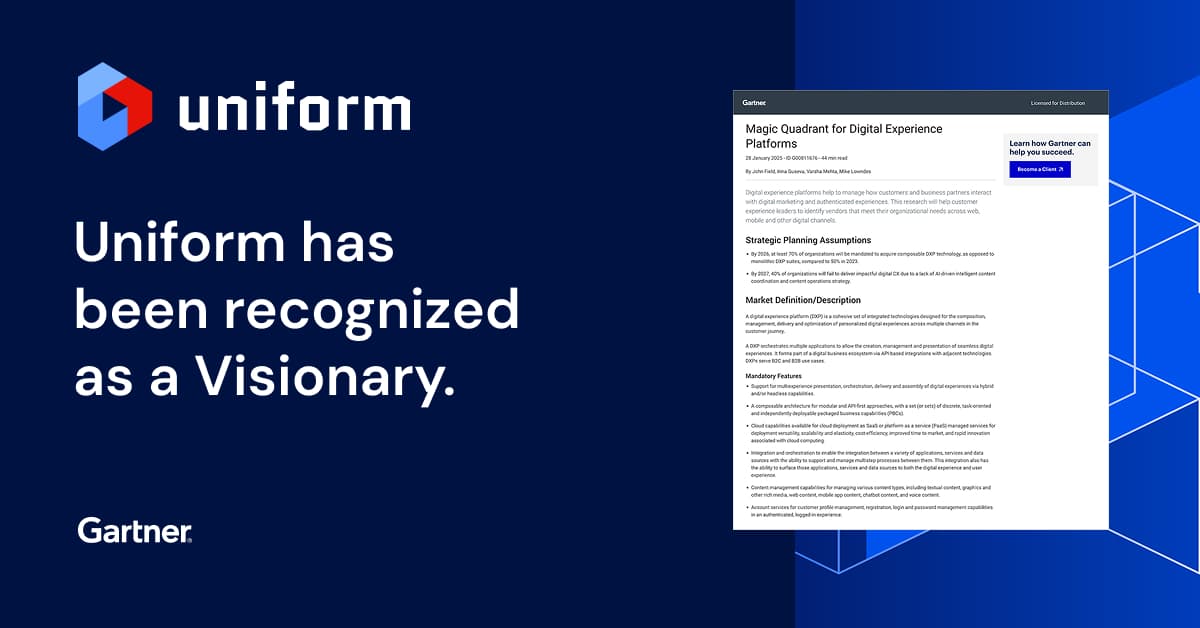
Uniform Recognized as a Visionary in 2025 Gartner® Magic Quadrant™ for Digital Experience Platforms
Learn More