For the last 25 years, digital teams have built for people.
First for the web. Then for mobile. Then for a growing mix of channels, apps, and touchpoints. Through it all, the job was mostly the same: create fast, engaging, on-brand experiences for human visitors.
That model is changing.
AI agents, answer engines, assistants, and agentic workflows are becoming a new interface for discovery, evaluation, and action. Increasingly, the next customer interaction may not begin on a homepage at all. It may begin in an AI interface that finds, summarizes, compares, recommends, and eventually transacts on a user’s behalf.
According to the
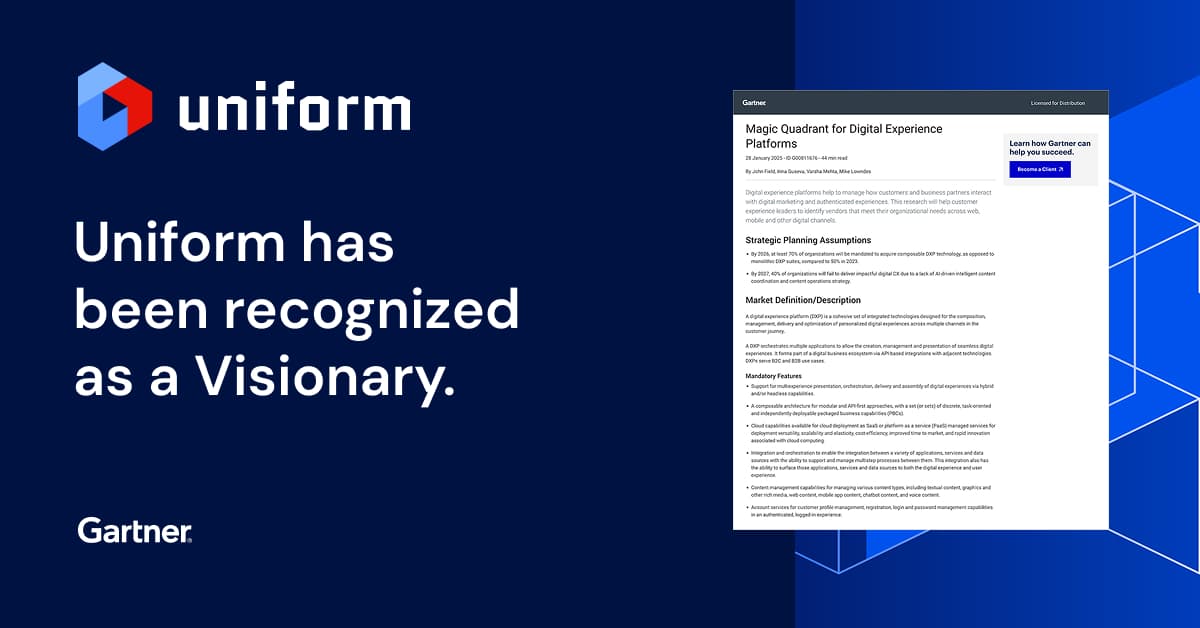
Gartner® Innovation Insight: Agentic CMS, “by 2028, 80% of customer interactions will shift from web, search, social, mobile applications and other traditional digital CX channels to agentic AI interfaces.”
That does not mean websites disappear. It means digital teams now need to serve two audiences at once:
- Humans, who expect rich, fast, personalized experiences
- Agents, which require structured, semantic, addressable content and data they can find, interpret, and act on
This is the dual-audience web, and it calls for a new operating model.
Composable architecture changed the game by helping teams break free from rigid, all-in-one platforms. Instead of forcing content, commerce, DAM, PIM, and custom systems into one stack, teams could connect the tools already in use and orchestrate experiences across them.
This flexibility mattered. It still does.
However, composability alone does not solve the next challenge: building for both human visitors and AI intermediaries simultaneously.
Serving humans is about engagement. Serving agents is about structure. Humans respond to storytelling, visual design, speed, and
personalization. Agents depend on content that is semantically organized, reusable, accessible across systems, and ready for retrieval, reasoning, and action.
An agentic DXP is composable at its core, but it also helps teams work alongside AI to create, govern, enrich, and optimize experiences faster. It treats content and data as equal citizens. It connects to the rest of the stack and helps teams prepare experiences for a world where people and agents both shape the customer journey.
Most organizations are not starting from zero. They already have content, systems, a design system,
content management system, a commerce engine, a DAM, maybe a PIM, and probably a few older platforms still doing important work.
The challenge is not whether there is enough content; it is whether the content is reusable, structured, connected, and ready for a new class of consumers.
To succeed in the dual-audience web, teams need a few fundamentals in place:
Reusable content and data: If content only works in one page template or one channel, it will struggle in a world of answer engines and agents. Content has to be modular enough to power websites, apps, APIs, search experiences, and AI-driven interactions.
A flexible design system: The presentation layer must not be tightly bound to a single source or workflow. Components need to stay open so teams can orchestrate any content or data into the right experience for the right audience.
Semantic structure: Agents respond to clarity, hierarchy, metadata, and meaning. This means teams need content models and operational workflows that support discoverability, citation, and downstream use.
Governance without bottlenecks: As AI speeds up execution, governance becomes more important. The goal is faster workflows with the right human checkpoints and clear rules.
A few years ago, Uniform introduced
Scout as its agentic AI. More recently, the biggest update to Scout since its launch
was delivered.
The objective was simple: make Scout dramatically more useful in real operating environments. More than a writing assistant, utilize it as an execution layer inside the digital experience workflow.
- create and refine content and experiences
- search semantically across pages, entries, and assets
- execute bulk updates in natural language
- enrich existing content for answer engine and generative discovery use cases
- connect to external tools through MCP servers
- toggle autonomous or review-based modes depending on the task
Scout can help with the repetitive, time-consuming, operational work that slows teams down, while humans stay focused on strategy, creative judgment, and final review.
The latest Scout release introduced five major capabilities that matter for digital teams preparing for this shift.
Programmatic governance
Teams can turn repeatable instructions into reusable skills that Scout follows when performing specific tasks. Therefore, governance no longer has to depend entirely on manual review and tribal knowledge. Instead, organizations can encode standards into the workflow itself.
MCP server connectivity
Scout can now connect to any tool with an MCP server, making it easier to pull external context into Uniform and act on it. This opens the door to more connected workflows across systems, teams, and agents.
Vector search capabilities
Scout can search across projects by meaning as well as by keyword, simplifying how you find the right content, patterns, entries, or experiences based on intent and context rather than exact phrasing.
Expedited bulk operations
Teams can describe a change in natural language and let Scout apply it across large content sets. This allows you to update fields, enrich content models, translate content, and prepare experiences for new optimization requirements at scale.
Autonomous and review modes
Not every task deserves the same level of autonomy. Some work should be executed immediately; others must wait for human approval. Scout supports both modes, allowing admins to choose the right balance between speed and oversight.
The most practical way to think about AI in digital experience is as a division of labor. Humans should still lead the work that depends on judgment, taste, and accountability:
- strategy
- creative direction
- brand stewardship
- sensitive or high-stakes experiences
- final review before launch
Agents are best used where scale, repetition, and speed matter most:
- bulk updates
- audits
- enrichment
- content preparation
- setup tasks
- repetitive operational changes
This delineation is highly important as the promise of agentic workflows is more than automation. It is a shorter distance between idea and launch.
The point is not to remove humans from the process. The point is to help teams spend less time on tedious work and more time on the decisions that actually require them.
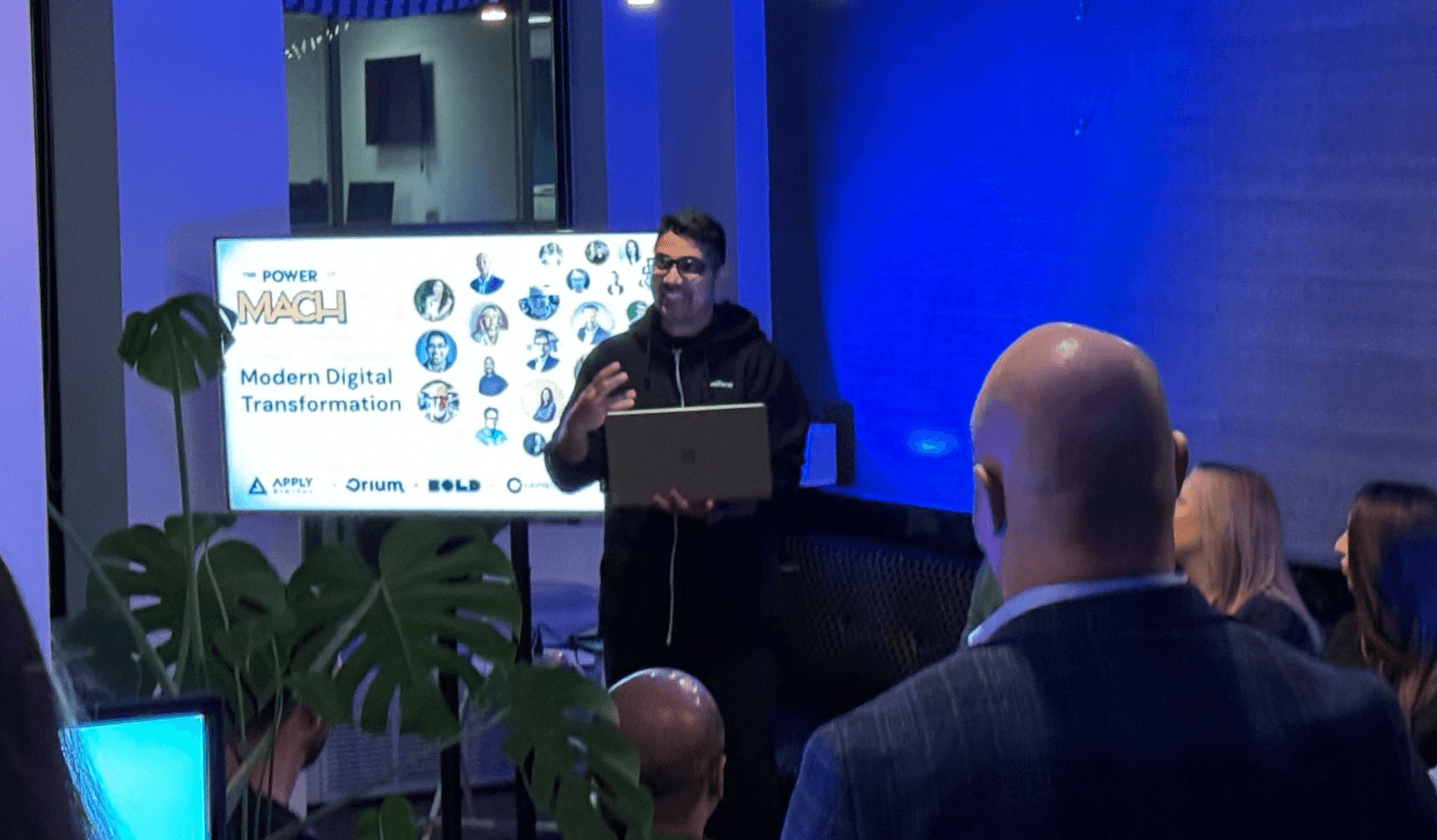
Using Scout, the session demonstrated how teams can create and refine experiences directly in the Uniform
Visual Workspace, working alongside AI rather than jumping between disconnected tools. It showed how a page could be assembled conversationally, how content could be adapted with simple prompts, and how structure and guidance help keep outputs aligned with brand expectations.
The webinar also demonstrated how Scout can generate structured content in a defined voice using reusable skills. Quality at scale depends on more than generation. It depends on guidance, context, and consistency across fields, components, and content types.
It also exhibited how Scout can support answer engine and generative optimization workflows by helping teams enrich content with the structure and metadata needed to improve discoverability beyond traditional channels.
The session further explored how Scout can classify assets automatically, identify relevant content semantically, and execute bulk updates across an experience estate without forcing teams into slow, manual, page-by-page work.
With MCP server connectivity, the webinar displayed how external systems can become part of the workflow. In the demo, this included pulling context from HubSpot to shape more relevant messaging and landing page creation. The result is a more connected operating model, where content creation, orchestration, and activation happen with better context and fewer handoffs.
Finally, the session previewed Uniform Code, a new capability that brings AI-assisted code generation closer to Uniform itself. Uniform Code makes it possible to scaffold projects, create new experiences, and connect generated output back into Uniform so teams can continue refining visually and structurally inside the platform.
The shift to the dual-audience web is real, but that does not mean every organization should try to automate everything overnight. Most teams need to move with guardrails. They need clear review steps, practical governance, and a deliberate approach to where autonomy helps and where human oversight remains essential.
That is why the strongest approach is agentic at a sustainable pace. For some teams, that may start with content enrichment for answer engine visibility. For others, it may begin with semantic search, bulk updates, or bringing external systems into a more connected workflow. For greenfield teams, it may include code generation and faster composition of new experiences from day one.
The strategic advantage is clear: organizations that prepare content and operations for both people and AI intermediaries can move faster without sacrificing control. They can improve discoverability, reduce manual effort, and keep brand standards intact across more channels and workflows. In practice, that means better readiness for search evolution, more efficient operations, and stronger consistency across the digital estate.
- Structured content creates reach: modular, semantic content is easier to reuse across websites, apps, answer engines, and agent-driven experiences.
- Governance creates confidence: reusable skills, review flows, and clear standards help teams scale AI-assisted work responsibly.
- Connected workflows create speed: semantic search, bulk operations, and external integrations reduce handoffs and accelerate execution.






.svg)
.jpg)












.jpg&w=3840&q=75)