






.svg)

.jpg)













Uniform blog/Composability as a way of working
Composability as a way of working
.png&w=256&q=75)
Composability as a way of working
TL;DR
True value from composable technology comes when organizations update their workflows—not just their software. Despite widespread adoption of MACH technologies, most enterprises retain monolithic processes, limiting ROI and agility. For real speed, flexibility, and efficiency gains, composability must be adopted as a day-to-day operating model, not merely a procurement choice. The key takeaway: operational transformation closes the gap between potential and realized benefits in modern digital experience platforms.
Enterprise organizations that purchased composable technology and kept monolithic workflows are getting monolithic results from composable investments.
87% of enterprise organizations have widely implemented MACH technologies, yet only 23% have achieved a fully composable architecture. This gap highlights the sheer amount of organizations that upgraded their tech but kept the red tape.
Why does composable technology produce monolithic outcomes?
Composable architecture delivers modular flexibility, faster iteration, and reduced vendor dependency only when teams change how they operate inside it.
Most organizations did not change. Marketing teams still route content updates through development tickets. Personalization campaigns still require engineering configuration before launch. Channel expansions still follow sequential deployment timelines where web ships first, mobile waits, and email follows months later. Component libraries exist in the codebase but remain inaccessible to marketing because the workflow has never evolved to align with the architecture.
Enterprise technology analyst Jason Averbook identified the pattern precisely: "We keep buying tools, but nothing feels more flexible. Every change feels heavier than it should."
What does composability look like as an operating model?
The difference between composable procurement and composable operations shows up in how work moves through the organization every day:
Monolithic workflow | Composable operating model | |
Handoffs | Sequential: content > development > QA > launch | Parallel: assembly, personalization, and review are simultaneous |
Components | One-off builds for specific pages and campaigns | Universal library for cross-channel, cross-campaign reuse |
Personalization | Hard-coded by engineering per request | Marketing-led codeless implementation, edge-delivered at sub-50ms |
Updates | Batched into weekly or monthly release cycles | Continuous, instant deployment without developer queues |
Migration | Nuclear replatform freezing operations for months | Incremental modernization delivering measurable value at each stage (vs. after a "big bang" go-live) |
The results are measurable:
- TELUS achieved $1.1M in ROI during Year 1 and 60x developer efficiency gains.
- Taxfix increased experimentation velocity by 500% and achieved a 15% registration conversion lift.
- Leister Group cut annual platform costs by 50% and completed a full multi-site rebuild in 36 weeks with 3.5 FTE developers.
The composable health check
A quick diagnostic reveals whether an organization is operating composably or paying for composability while living in a monolith:
- Does the current platform require a developer to change a hero image on a landing page?
- Does launching a personalization campaign require an engineering sprint?
- Does adding a new data source mean months of custom integration work?
If the answer to any of these is yes, the platform is enforcing the monolithic workflow. Alvarez & Marsal's 2025 martech analysis found that only 28% of marketers believe their teams are fully trained to use their current stack, with tool utilization at roughly 33%. When the architecture is the bottleneck, no amount of training closes the gap.
Uniform was built for composable operations from day one:
- The Visual Workspace surfaces content from any connected source (CMS, DAM, PIM, commerce, CDP) in a single canvas where marketing teams assemble, personalize, test, and publish without developer intervention.
- Scout, the platform's AI agent, eliminates the coordination overhead that monolithic workflows depend on. Component assembly, content translation, SEO optimization, and A/B test configuration happen through conversation instead of through three meetings, two tickets, and a sprint planning session. Scout operates as the workflow accelerant that removes the handoffs composable architecture was supposed to eliminate but monolithic processes preserved.
- Siphon ingests legacy architectures and rebuilds them into reusable components. Rather than migrating data from one platform to another, Siphon crawls existing sites, identifies content patterns through machine learning, and reconstructs modern framework code (React, Vue, Next.js) from observed behavior. No source code access required. No content freeze.
- Over 70 pre-built integrations connect the existing martech stack through configuration rather than custom code.
An insurance provider completed a legacy migration transition in 4 months versus a 12-month estimate, achieved 30-point Lighthouse performance gains, and eliminated consultant dependency post-launch. Social Thinking automated 90% of page migrations and completed the move in 3 weeks with zero downtime, publishing new content throughout the entire transition.
In 2026, no organization can afford to stop publishing for months while it upgrades technology.
The composable litmus test
Averbook's litmus test is simple: if changing one part of how work gets done requires a major implementation, a vendor roadmap, or a new purchase, the organization does not have a composable strategy. It has composable technology managed through monolithic habits.
The 64-point gap between MACH implementation and full composability closes when organizations stop treating composability as a procurement category and begin operating it as a daily practice.
Ready to close the gap between the tech you invested in and how your teams work? Schedule a conversation with our experts today.
FAQs
Three indicators: marketing teams can launch or modify experiences without a development ticket, new tools integrate through configuration rather than custom code, and components built for one channel are reusable across others without re-engineering. Fail all three, and composable technology is running through monolithic processes.
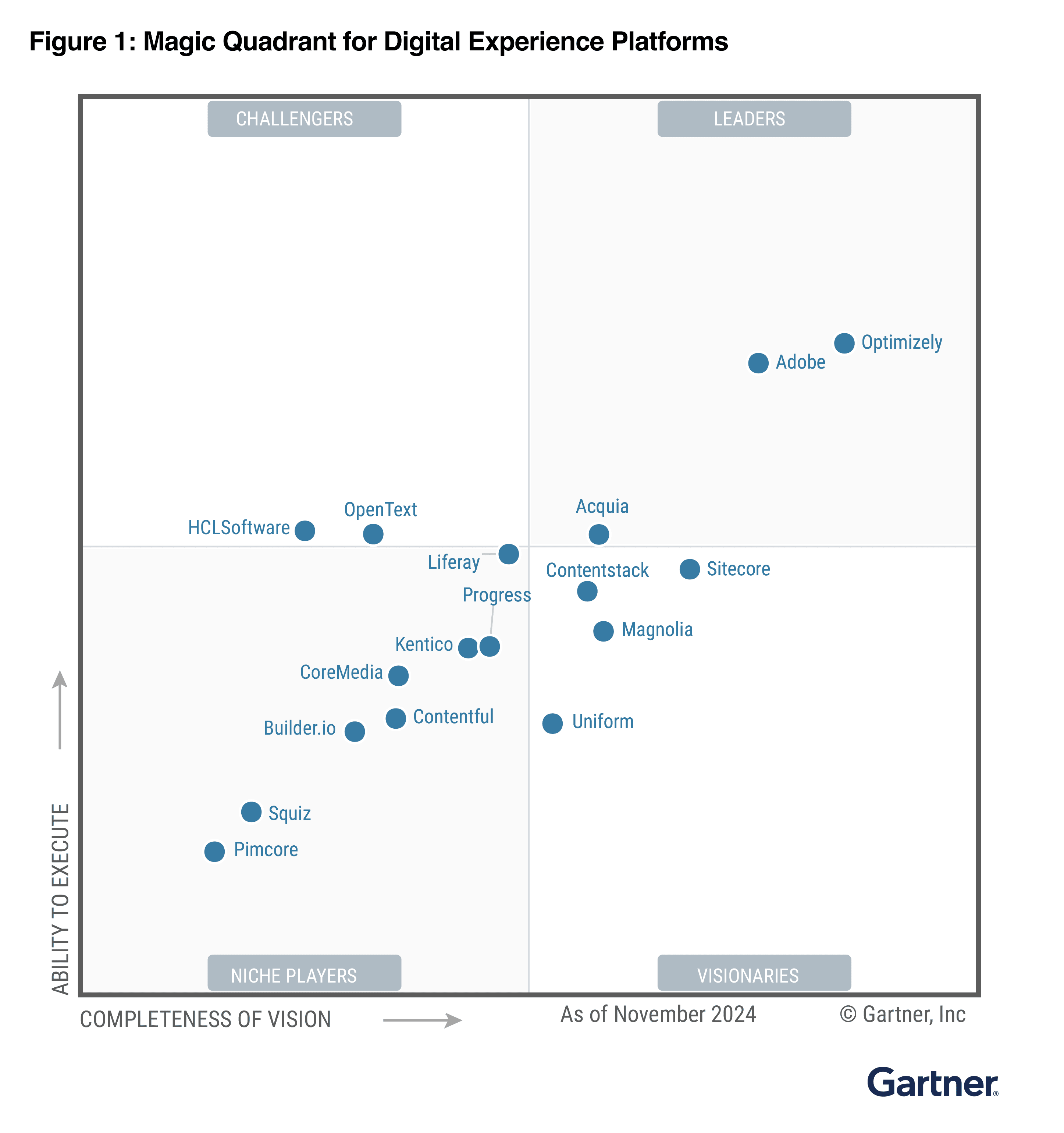
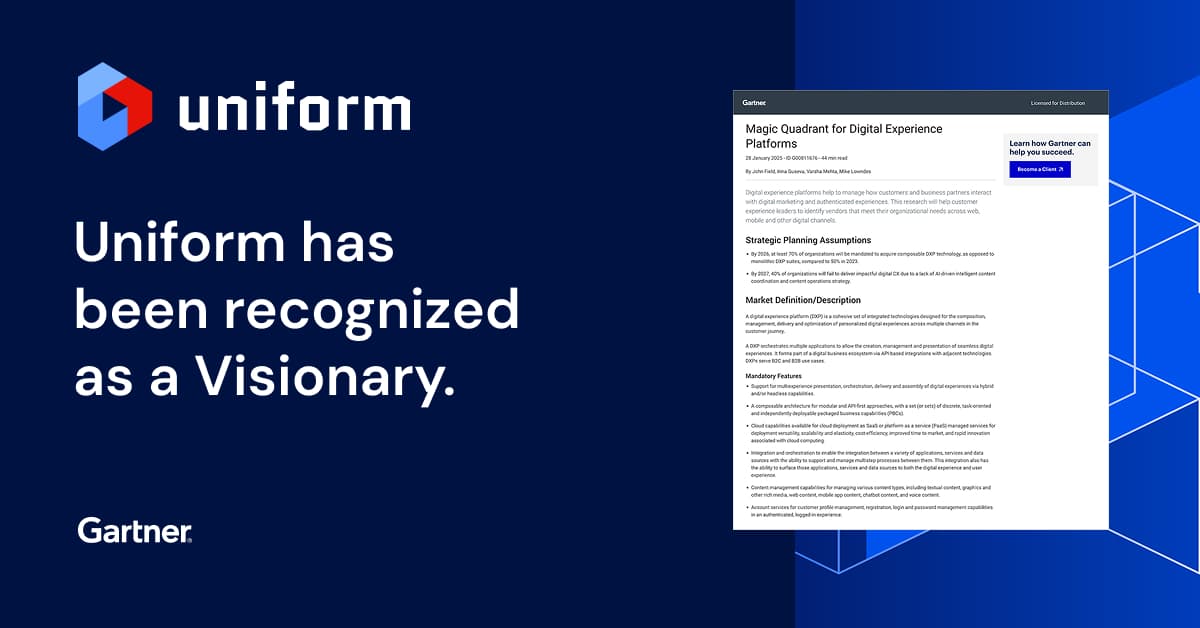
Uniform Recognized as a Visionary in 2025 Gartner® Magic Quadrant™ for Digital Experience Platforms
Learn More